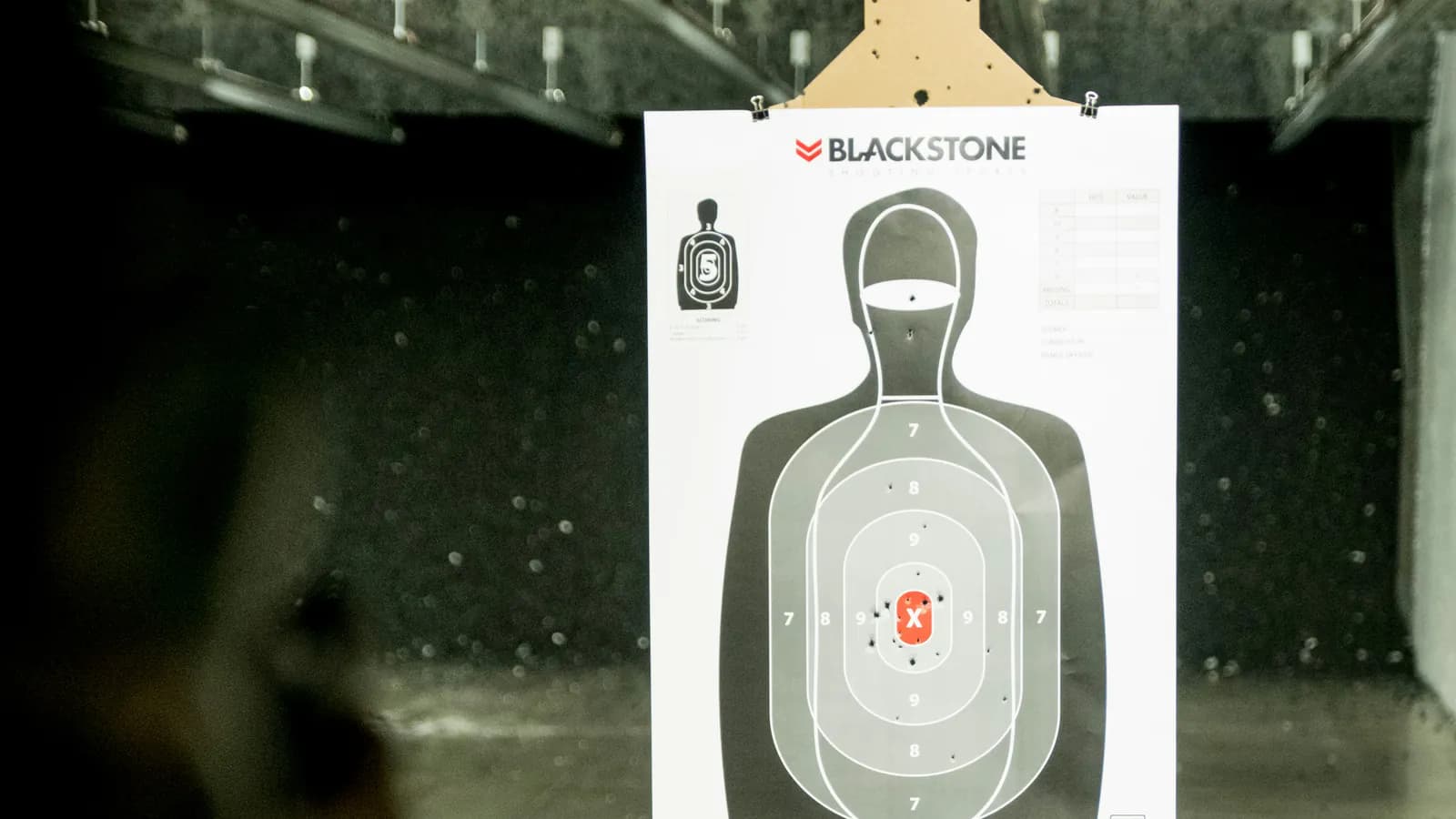
Zeroing
Zeroing Distances Explained: 10, 25, 36, 50, and 100 Yards
A reference on which zero distance to pick, for pistols and rifles. What each one is for, where the bullet crosses, who it suits, and how each one fails.
Read the article
Age verification
Outlaw Valley Tactical sells optics and accessories intended for adults. You must confirm that you are 18 or older to enter this site.
By entering you agree to our Terms of Service and Privacy Policy.
NEW PRODUCTS ADDED!
If red dots look like starbursts or smears to you, the optic is probably fine and your eye is doing the distorting. Here is why that happens and what actually fixes it.
A customer picks up a red dot, looks through it, and sees a comet. Or a starburst. Or a smeared blob that looks nothing like the crisp round dot on the box. The natural conclusion is that the optic is defective, so it goes back, and the replacement does exactly the same thing.
The optic is almost certainly fine. What is happening is a well known interaction between how a red dot produces its aiming point and how some eyes focus light. It is extremely common, it is not a defect in the sight, and there are three good ways to work around it.
A red dot sight works by projecting light from a tiny emitter onto a coated lens, which reflects it back to your eye. The critical detail is that the emitter is effectively a point source: a very small, very bright dot of light with no real size to it.
Point sources are unforgiving. Any imperfection in how your eye focuses light gets applied to that point and spreads it into a shape. If the cornea or lens of your eye focuses light slightly differently along one axis than another, that point of light stops being a point and becomes a line, a smear, a comet with a tail, or a starburst with several arms. The optic projected a perfect dot. Your eye rendered it as something else.
This is why the same sight can look flawless to one person and unusable to the next, and why swapping to a different brand of dot usually changes the shape of the distortion without removing it. The variable is not the sight.
You will also notice it gets worse as brightness goes up. A very bright dot spreads more than a dim one, which is a useful piece of information and leads directly to the first test.
Before you spend money, spend ten minutes confirming what is actually happening.
If those tests point at your eye rather than the optic, book an eye exam. Genuinely. Then keep reading, because there are optics that sidestep the problem entirely.
A prism sight is the most direct answer, and it is the one most people with this issue end up happy with.
A prism uses an etched reticle: the aiming point is physically etched into glass inside the optic, and you view it through a focusing lens system. There is no point source of light being projected at your eye. You are looking at a real, physical shape, brought into focus by the optic itself, exactly like the reticle in a rifle scope. Whatever your eye does to point sources, it does not do to a focused image.
The second half of the fix is the diopter. Most prisms have an adjustable eyepiece that lets you focus the reticle to your individual eye. Set it once, in daylight, by looking at a blank sky and turning the eyepiece until the reticle is sharp, then leave it alone. That adjustment is doing real optical work for you and it is the single most skipped step on a new prism.
Prisms usually come in fixed low magnification, commonly 1x, 3x, or 5x. Fixed magnification keeps the optic short, simple, and reasonably light.
A low power variable optic solves the same problem for the same reason: etched glass, focused through a lens system, with a diopter on the eyepiece. If the reticle in a hunting scope has always looked crisp to you, an LPVO will too.
The difference is that an LPVO gives you a magnification range instead of a single setting, typically 1x up to somewhere between 4x and 10x, which buys real capability at distance. It costs you weight, length, and money, and it introduces a magnification ring that can be on the wrong setting at the wrong moment. The full tradeoff against a plain dot is covered in red dot vs LPVO.
One caution specific to this topic: many LPVOs have an illuminated center dot, and on some designs that illuminated portion is bright enough at max setting to bloom in the same way a red dot does. That is not a failure of the optic, it is the same effect returning, and the fix is the same. Turn the illumination down. The etched reticle underneath stays sharp regardless.
This is the part people are unprepared for coming from a red dot. A prism, like a scope, has a fixed eye relief: a specific distance behind the optic where the full image appears. Most modern prisms land somewhere around 2.5 to 3.5 inches. Too close or too far and you get a black ring, a shadowed crescent, or nothing at all.
Check the number for the specific optic rather than assuming the band, because the most famous prism on the market sits outside it. ACOG pattern optics run about 1.5 inches of eye relief, which is close enough that it changes where the optic has to sit and how forgiving it is from an awkward position. That is exactly the surprise this section exists to prevent, so look it up before you buy rather than after.
The practical consequences:
This deserves its own section because it is a genuine advantage and it is badly undersold.
On a prism or an LPVO, the reticle is physically etched into the glass. If the battery dies, if the illumination fails, if you never turn it on at all, you still have a usable black aiming point. In daylight against most backgrounds that is completely serviceable. Illumination becomes a convenience for low light and for contrast against dark targets rather than a requirement for the optic to function.
A battery powered red dot, by contrast, is a flashlight with a lens. No power, no aiming point, which is why people put backup iron sights behind them. The exception worth knowing is the dual illuminated designs, which run a fibre optic collector for daylight and tritium for the dark and carry no battery at all. They solve the dead cell problem completely, at the cost of giving up any control over brightness.
Do not skip the cheapest option on the list. If corrective lenses sharpen a red dot for you, that is a fifty dollar problem rather than a five hundred dollar one, and it improves everything else you look at as a side effect.
A few things worth knowing:
Again, that conversation belongs with an eye care professional. We can tell you what an etched reticle does. We cannot tell you anything about your eyes.
The short version
If a red dot looks like a starburst, turn the brightness down first and see an optometrist second. If you still want it gone, buy an etched reticle. A prism is the cheaper, lighter answer for close and medium range. An LPVO is the answer if you also want reach. Both give you a diopter to tune to your own eye, and both keep working with the illumination off.
Prisms, dots, and variable optics all live in optics, and whichever way you go, get the mount right at the same time. Height and position matter more on a prism than on a dot, and a torque wrench is still the cheapest accuracy upgrade there is.
If you are weighing a variable optic against a plain dot on the merits rather than on your eyes, read red dot vs LPVO. If you have landed on magnification and now need to pick the actual specification, how to choose a rifle scope walks through magnification, reticle, and turrets.
Setting a diopter, finding a repeatable cheek weld, and building a head position that works with a real eye box are all easier with someone watching. That is the kind of thing our lessons are for, in person around Phoenix or live online.
Keep reading
A reference on which zero distance to pick, for pistols and rifles. What each one is for, where the bullet crosses, who it suits, and how each one fails.
Read the article
The questions to answer before you spend anything, how the paperwork actually works, what ships to your door versus to a dealer, and what to do in the first month after you buy.
Read the articleThe highest return training available costs nothing and takes ten minutes. Here is the safety protocol that has to come first, then the drills that actually build skill.
Read the article