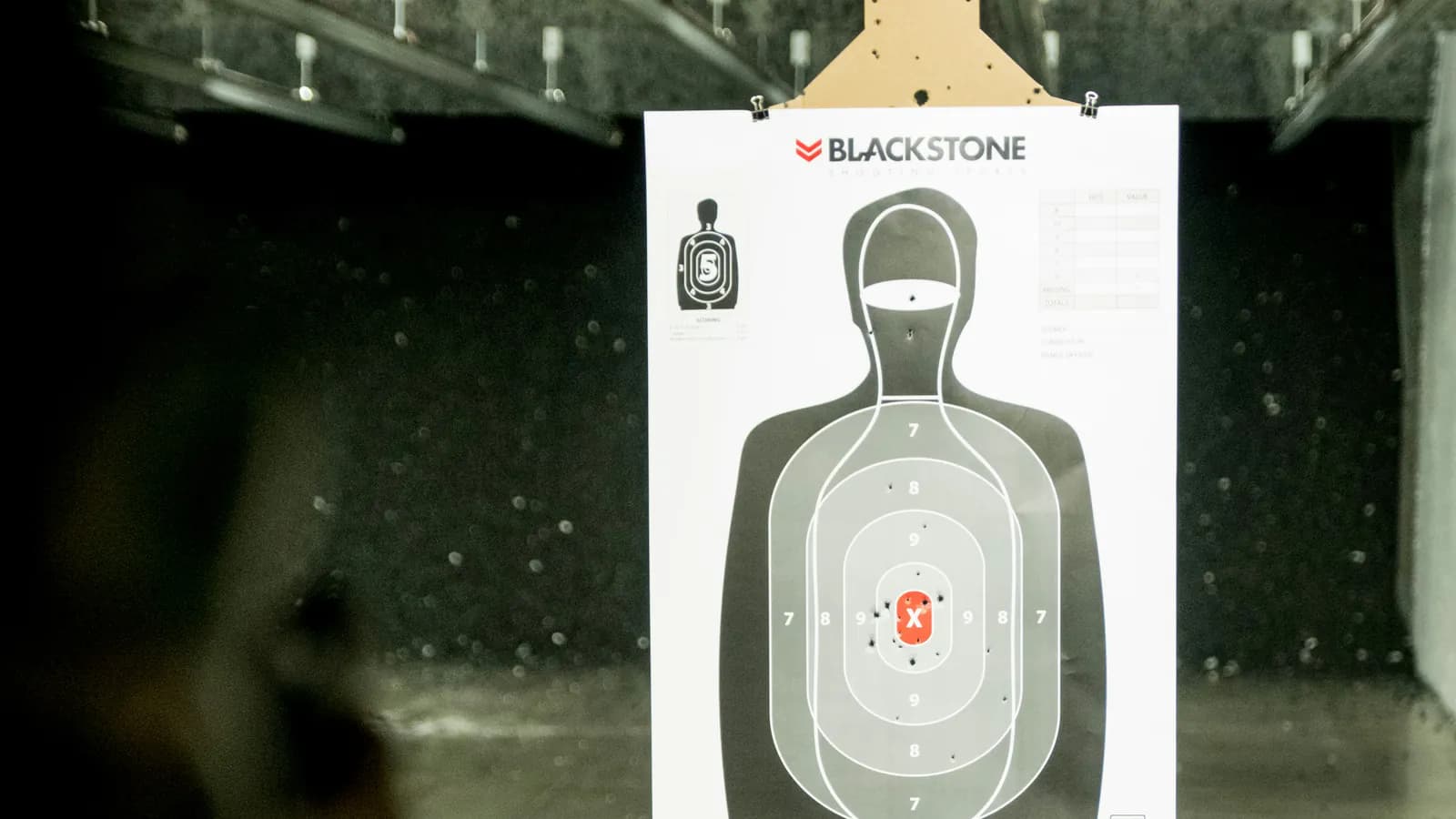
Zeroing
Zeroing Distances Explained: 10, 25, 36, 50, and 100 Yards
A reference on which zero distance to pick, for pistols and rifles. What each one is for, where the bullet crosses, who it suits, and how each one fails.
Read the article
Age verification
Outlaw Valley Tactical sells optics and accessories intended for adults. You must confirm that you are 18 or older to enter this site.
By entering you agree to our Terms of Service and Privacy Policy.
NEW PRODUCTS ADDED!
Start from what you actually shoot, not from the spec sheet. Here is what each number on the box does, and which ones are worth paying for.
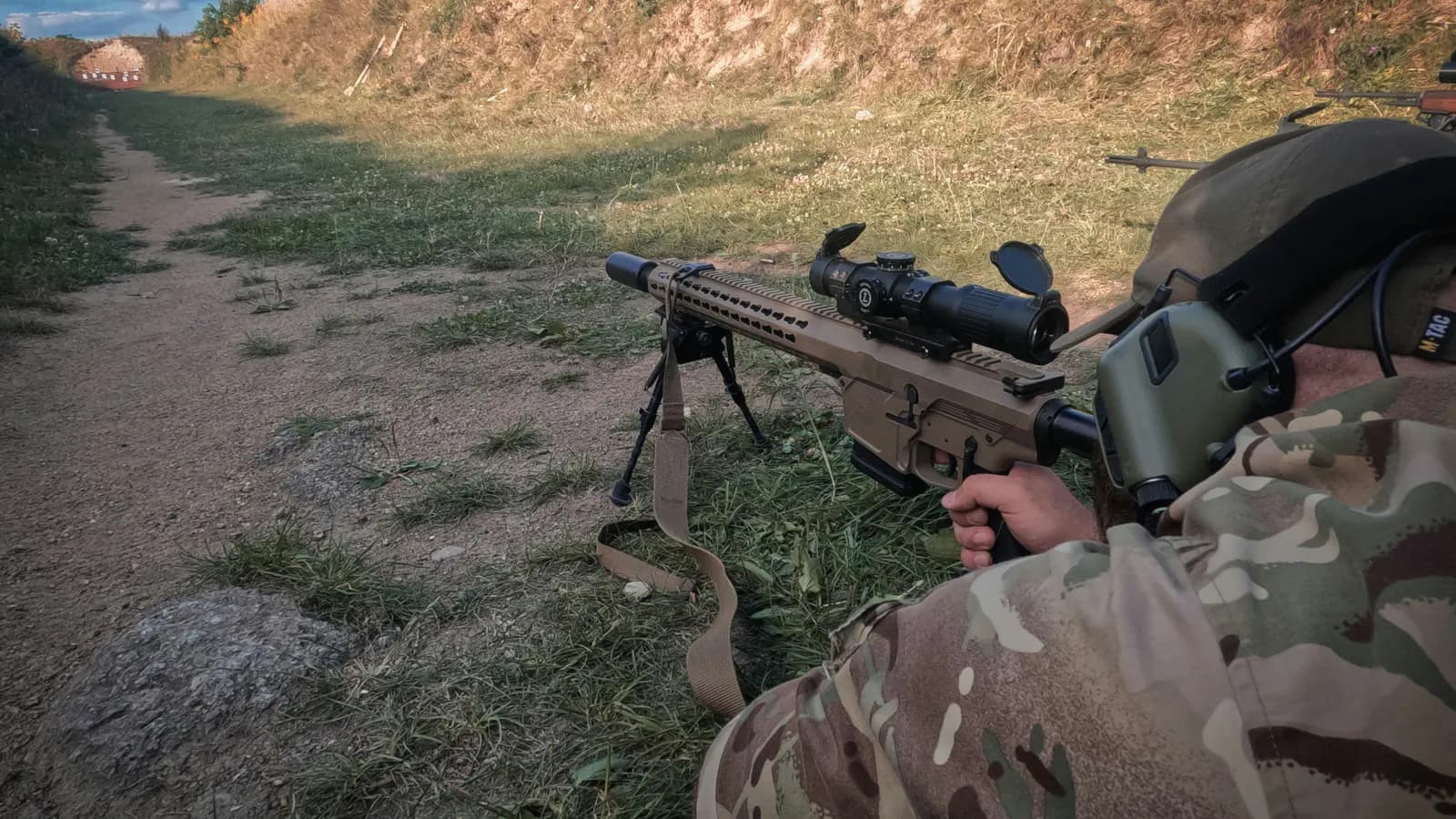
Scope shopping goes wrong in a predictable way. Someone reads a spec sheet, decides more magnification and a bigger objective must be better, buys a heavy high magnification scope for a rifle that never shoots past 200 yards, and then spends every range trip fighting a narrow field of view and a cramped eye box. Nothing is wrong with the scope. It is answering a question that rifle never asks.
The spec sheet is the last step, not the first. Start with the honest answer to one question: what do you actually shoot, at what distance, from what position? Everything below is downstream of that.
Write down the real numbers before you look at a single product page.
Those five answers eliminate about eighty percent of the market before you have compared a single lens coating.
Magnification is a range, and the bottom of the range matters as much as the top.
The rule of thumb worth carrying: roughly 1x of magnification per 25 yards of distance covers general use on a centerfire rifle. That puts you around 4x at 100 yards and 12x at 300, which is more than enough magnification to make the hit.
Seeing the hit is a completely different problem, and it is worth separating the two because people conflate them and then buy too much scope. Reading bullet holes in paper takes far more magnification than aiming does: 4x will not show you holes at 100 yards, and small calibre holes at 200 yards ask for something in the twenties or higher depending on your eyes, the paper, and the light. Past a few hundred yards even good rifle scopes stop resolving them at all. That is what spotting scopes and target cameras are for, and it is not a job to buy magnification for on a rifle you have to carry and shoot. Most shooters spend most of their trigger time at the bottom third of whatever range they bought.

Optics
Vortex Viper HD 3-15×44 VMR-3 MRAD SFP Rifle Scope, 30mm Tube, VPR-31503
$734.99
The objective is the front lens. A bigger one gathers more light, and that is genuinely useful in low light, but it is not free.
What actually matters is exit pupil: the diameter of the beam of light leaving the eyepiece. Divide the objective diameter by the magnification. A 50 mm objective at 10x gives a 5 mm exit pupil. The same scope at 25x gives 2 mm.
A dark adapted human pupil dilates to somewhere around 5 to 7 mm, shrinking with age. Once the exit pupil is larger than your own pupil, the extra light is wasted, which is why a huge objective on low magnification buys nothing in daylight. Where it does pay off is at high magnification in fading light, when the exit pupil has shrunk to something small.
The cost of a big objective is mounting height. A 56 mm objective needs taller rings to clear the barrel, which raises the scope, which forces your head up off the stock. A cheek riser fixes that, but now you are adding hardware to solve a problem you created by buying a lens you may not need. For most shooting, a 40 to 44 mm objective mounted low is a better rifle than a 56 mm mounted high. Whatever you land on, buy rings or a mount that fits it properly from mounts.
This is where the reticle lives, and it decides whether your reticle markings mean anything at different magnifications.
First focal plane. The reticle grows and shrinks with the image. Its subtensions stay true at every magnification, so a mark that means 1 mil at 4x still means 1 mil at 16x. That means you can range, hold, and correct off the reticle at any zoom setting without thinking about it. The tradeoff is that at the bottom of the range the reticle can get very small and hard to see, and first focal plane costs more to build.
Second focal plane. The reticle stays the same apparent size while the image zooms. It is always crisp and easy to see, and it is cheaper. The catch is that the subtensions are only correct at one magnification, almost always the top end. Hold marks at 6x on a 3-18x second focal plane scope are simply wrong unless you do the math.
Which to buy:
The reticle is the part you look at every second you are behind the rifle, and it is the spec most people give the least thought to.
Whichever you pick, the reticle units and the turret units must match. This is the single most common configuration mistake in scope buying, and it is covered properly in MOA vs MRAD explained.
The short version
Pick magnification from your real distances, keep the objective modest so you can mount low, choose first focal plane if you hold and second focal plane if you dial, and make sure the reticle and turrets use the same unit. Spend what is left on glass.
Main tubes come mostly in 1 inch, 30 mm, and 34 mm. Bigger tubes do not meaningfully brighten the image, whatever the marketing suggests. What they give you is room inside for the erector assembly to move, and that means more total elevation travel.
Travel only matters if you dial. A 1 inch tube with fifty or sixty MOA of total adjustment is plenty for a rifle zeroed at 100 yards and shot to 400. Reaching past 800 or 1,000 yards, you want more, and a 30 or 34 mm tube plus an angled mount with built in elevation gets you there.
The other consequence is weight. A 34 mm tube scope with a 56 mm objective is a heavy thing, and every ring, base, and mount option narrows with it.
Parallax is what happens when the target image and the reticle are not on the same optical plane. Move your eye behind the scope and the reticle appears to drift across the target. Wherever the reticle sits when your head moves is where the shot goes, so it is a real source of error.
Fixed parallax scopes are set at the factory, commonly around 100 yards for centerfire rifles and 50 yards for rimfire. Below about 9x or 10x the error is small enough that most shooters never notice it. Above that, and at very close or very long distances, it grows enough to matter, which is why higher power scopes have an adjustable parallax knob or an adjustable objective.
Practical use: focus the target with the parallax dial, then check by moving your head slightly. If the reticle stays put on the target, you are set. Do not use the parallax dial as a rangefinder, the markings on it are approximate.
Optical quality is not a myth. Better glass, better coatings, and better assembly give you more contrast, truer color, less flare shooting toward the sun, and a usable picture for an extra fifteen or twenty minutes at each end of the day. Anyone who tells you it is all marketing has not looked through two scopes side by side at dusk.
But the curve flattens. The jump from a bargain bin scope to a solid midrange one is enormous. The jump from solid midrange to premium is real but much smaller, and the jump from premium to flagship is detectable mostly at the edges of the day and the edges of the range.
A more useful way to spend: at any given budget, mechanical reliability beats optical brilliance. A scope that tracks accurately, returns to zero, and survives recoil is worth more than one that is slightly prettier and drifts. Test tracking with a tall target test before you trust a new scope with anything that matters.
The old line about buying once and crying once is mostly true, and it has a limit worth naming.
It is true in the sense that a very cheap scope is money burned. It will not track, it will not hold zero, and you will replace it, so the cheap purchase costs more in the end.
It stops being true when you have not yet learned what you need. If you are new to a discipline, buying the flagship first often means paying for features you cannot use yet and locking yourself into a configuration you would choose differently in a year. A good midrange scope teaches you what you actually want, and it holds enough value to move on when you outgrow it.
Also worth saying plainly: sometimes the right answer is not a scope at all. If your shooting is close and fast, a red dot is lighter, simpler, and better at the job. If your problem is finding animals in the dark rather than aiming at them, no amount of glass fixes that, and thermal is a different tool for a different question.
If you are torn between magnification and speed on a carbine, start with red dot vs LPVO. If the unit question is still open, read MOA vs MRAD explained before you buy anything with a marked reticle.
When you know what you are looking for, browse optics and pair it with rings or a one piece mount from mounts that fits your tube diameter, objective, and desired height.
And if what you really want is someone to help you set the thing up, level the reticle, set eye relief, and confirm it tracks, that is a coached afternoon rather than a reading exercise. Our lessons cover optic setup and zeroing, in person around Phoenix or live online.
Keep reading
A reference on which zero distance to pick, for pistols and rifles. What each one is for, where the bullet crosses, who it suits, and how each one fails.
Read the article
The questions to answer before you spend anything, how the paperwork actually works, what ships to your door versus to a dealer, and what to do in the first month after you buy.
Read the articleThe highest return training available costs nothing and takes ten minutes. Here is the safety protocol that has to come first, then the drills that actually build skill.
Read the article