Zeroing
Zeroing Distances Explained: 10, 25, 36, 50, and 100 Yards
A reference on which zero distance to pick, for pistols and rifles. What each one is for, where the bullet crosses, who it suits, and how each one fails.
Read the article
Age verification
Outlaw Valley Tactical sells optics and accessories intended for adults. You must confirm that you are 18 or older to enter this site.
By entering you agree to our Terms of Service and Privacy Policy.
NEW PRODUCTS ADDED!
What the parts are, which ones deserve your money, and the honest answer on whether building your first rifle actually saves you anything.
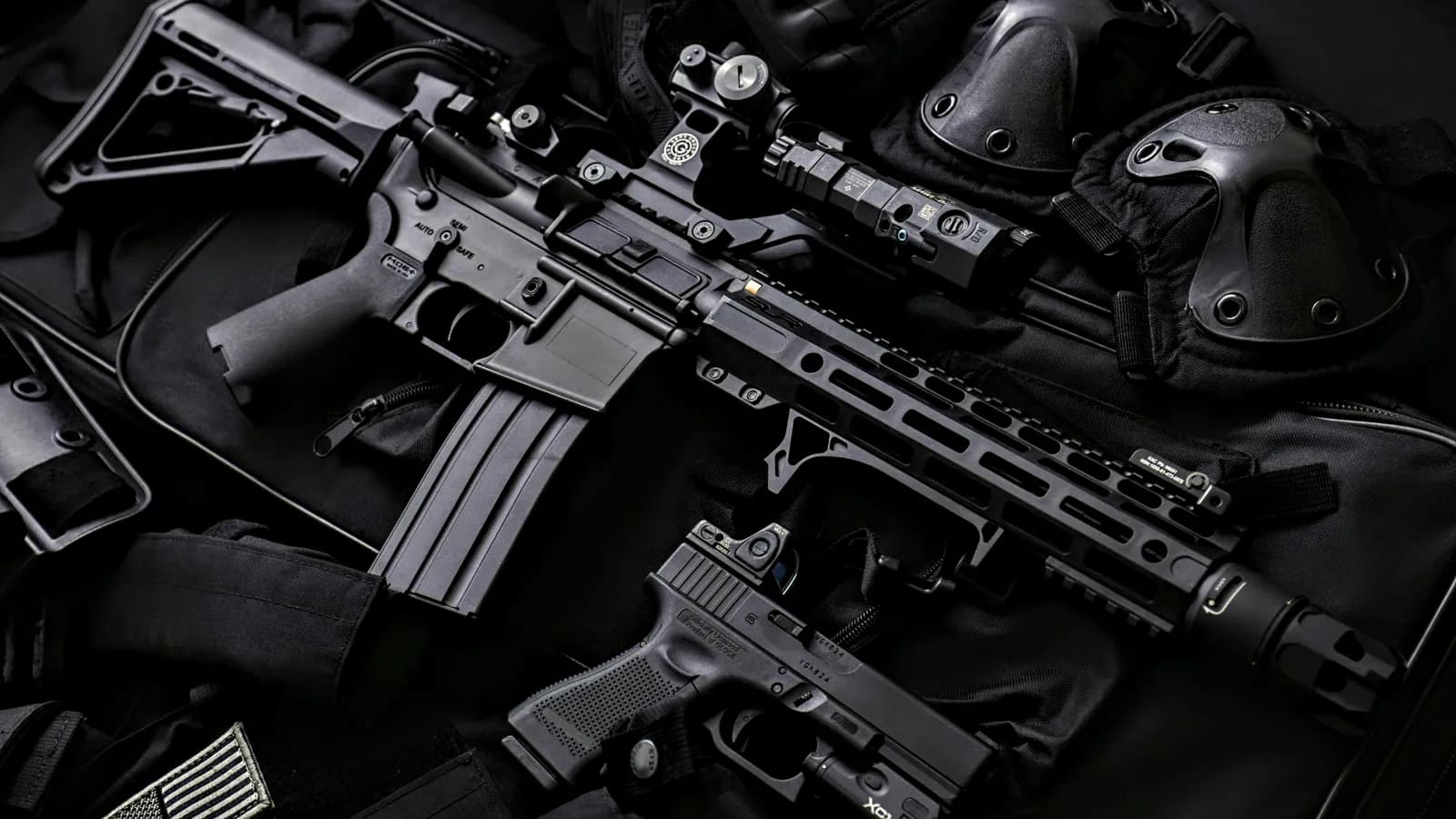
The AR-15 is the most modular common rifle in the country, which is why so many people decide their first one should be a build. It is a reasonable instinct. It is also the source of a lot of money spent badly.
This is a parts and budget guide, not an assembly guide. The goal is that you walk into the decision knowing what each group of components does, which ones actually change how the rifle shoots, and which ones are jewelry. Where the work gets technical, the right answer is a competent gunsmith or armorer, and we will say so.
Building a first rifle almost never saves money. Manufacturers buy barrels, bolts, and receivers by the pallet and assemble them on fixtures, so a complete rifle from a serious maker usually undercuts the same specification assembled one part at a time from retail.
What building actually buys you is two things, and both of them are worth something:
If your reason is neither of those, buy a complete rifle from a maker with a warranty and spend the difference on an optic, a light, and ammunition. That is not a consolation prize. That is the better rifle for most people.
Before any of the rest of this matters: keep ammunition out of the room where you are working. Not on the far end of the bench. Out. Verify the firearm is unloaded physically and visually every time you pick it up, including after a break, and keep the muzzle pointed somewhere that would absorb a round if you were wrong. The overwhelming majority of workbench accidents come from a live round that nobody expected to be there.
At a high level, an AR-15 is two halves and a handful of subsystems inside them.
Four line items. Spend here.
This is the part most first builds get wrong. The gas system length is the distance from the chamber to the gas port, and it determines the timing of the whole action. Too short a system for the barrel and the rifle is over gassed: harsh recoil, hard extraction, accelerated wear. Too long and it is under gassed: short stroking, failures to lock back.
In general terms, and manufacturers vary, a 16 inch barrel is commonly paired with a mid length gas system, and an 18 inch barrel is commonly paired with a rifle length system. Shorter barrels move down the ladder accordingly. The practical advice for a first build is simple: buy a barrel from a maker that publishes the gas system it is cut for, and do not mix and match to save money. An adjustable gas block can tune a system that is close, but it cannot rescue a pairing that is wrong.
Barrel length also intersects with regulation. Configurations below certain federal length thresholds, and combinations of short barrels with certain stocks, fall into separately regulated categories with their own requirements. That is a legal question rather than a parts question and it is outside the scope of this article. Verify it with the ATF and an attorney before you buy anything in that territory.
Optic height is easy to get wrong on a rifle you are configuring from scratch. See AR-15 optic mounting height before you order a mount.
The rifle is roughly half of what you are about to spend. Here is the shape of a realistic first build budget, in approximate current market terms:
If the numbers only stretch to the rifle, build a less expensive rifle. Parts and small components live in parts if you are pricing out the list.
A few tools matter enough to mention. A calibrated torque wrench that reads in the range the fasteners actually call for, because guessing at torque is how optics move and barrel nuts loosen. Proper vise blocks so you clamp the receiver rather than deform it.
Some work is genuinely worth paying for. Barrel installation and gas block alignment, muzzle device timing, castle nut staking, and anything involving headspace all reward experience and specialized gauges. Headspace in particular is a gunsmith question: if you are combining a bolt and a barrel that did not ship together, have someone qualified check it rather than assuming it is fine.
There is no shame in buying a complete upper receiver assembled by someone who does it every day and putting your effort into the lower.
Before a finished rifle goes anywhere near live ammunition, it gets a function check with the firearm verified empty: safety selector operates correctly in both positions, the trigger resets, the bolt locks back on an empty magazine, the charging handle and forward assist work, and magazines seat and drop cleanly.
Then it gets proved. The first range session is a diagnostic session. Shoot in small increments, watch how brass ejects, watch for short stroking or failures to lock back, and stop at the first sign of anything unusual instead of shooting through it. Several hundred rounds without a stoppage, with the ammunition you intend to use, is a reasonable bar before you rely on the rifle.
The short version
Building rarely saves money. It buys configuration and understanding. Spend on the barrel, the bolt carrier group, the trigger, and the optic and mount. Save on furniture and finishes. Match the barrel to its gas system, hand the technical work to a gunsmith if you are unsure, verify the law for your configuration first, and prove the rifle with real ammunition before you trust it.
If you are pricing the build, start with parts, then decide the sighting system and its mount together in optics and mounts. If the optic is still an open question, red dot vs LPVO settles it.
And if you would rather have someone check your work and walk you through a proper function check and first range session, that is exactly the kind of thing our lessons cover, in person around Phoenix or live over video.
Keep reading
A reference on which zero distance to pick, for pistols and rifles. What each one is for, where the bullet crosses, who it suits, and how each one fails.
Read the article
The questions to answer before you spend anything, how the paperwork actually works, what ships to your door versus to a dealer, and what to do in the first month after you buy.
Read the articleThe highest return training available costs nothing and takes ten minutes. Here is the safety protocol that has to come first, then the drills that actually build skill.
Read the article