Confirm access before you go. Range hours, fees, rules, membership requirements, and public land access all change frequently, and seasonal closures appear with little notice. Nothing on this page is a current access report. Check with the managing agency (the Bureau of Land Management, Tonto National Forest, or the range itself) before you rely on any of it. This is general information, not legal advice.
Phoenix is one of the easier large cities in the country to shoot near, and it is also one of the easier ones to get wrong. There are real ranges in every direction, there is an enormous amount of federal and state land around the valley, and the difference between a legal spot and a closed one is often invisible from the road.
This is not a directory. Directories go stale faster than anyone updates them, and a stale one sends people somewhere closed. What follows is the useful version: the categories of place that exist, what each one is good for, and how to confirm a specific spot yourself before you load the truck.
The four kinds of place
Large outdoor public ranges
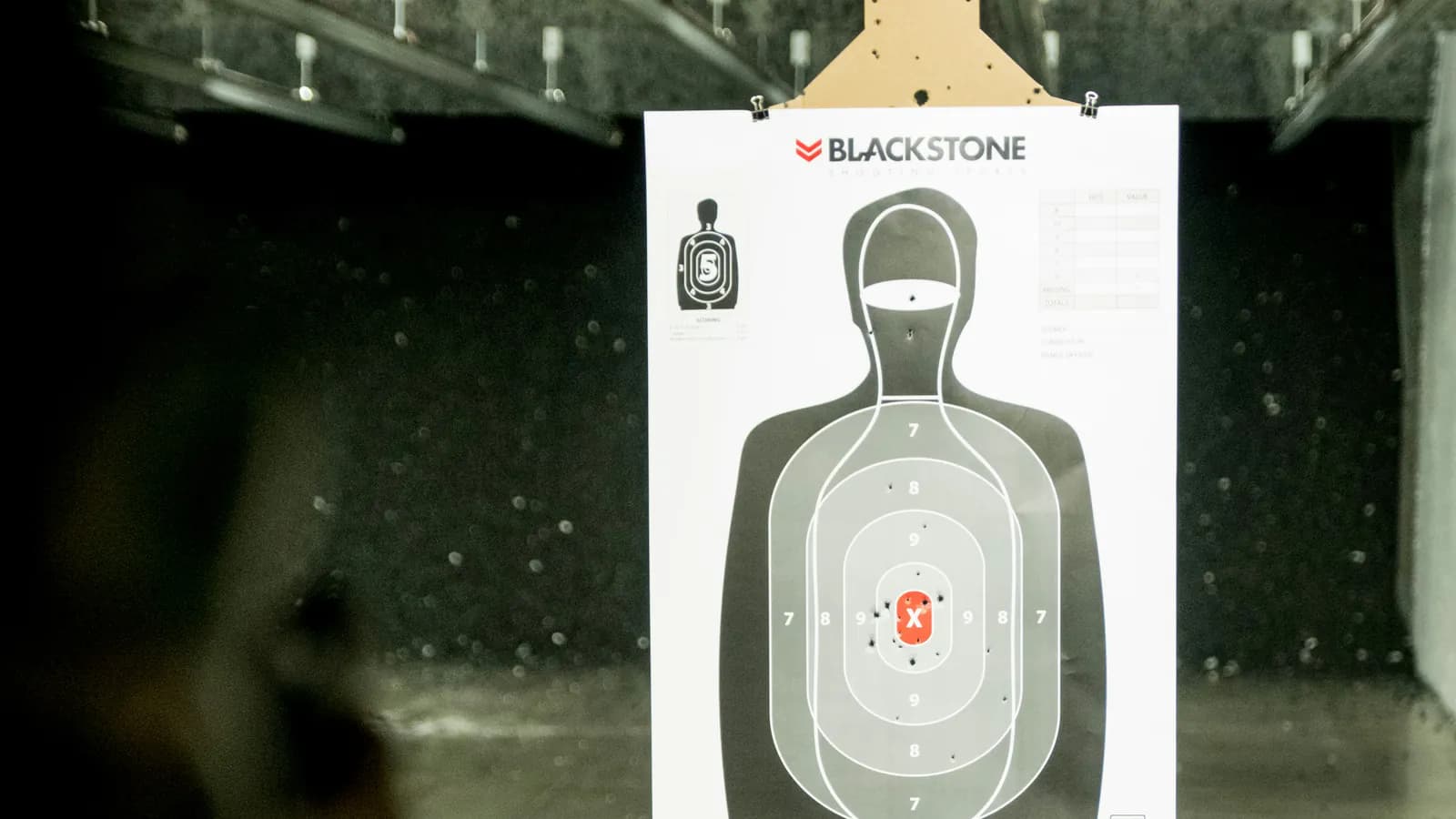
These are the big established facilities, usually well outside the developed part of the valley, with multiple bays at fixed distances, covered firing lines, and staff on site. They are the default answer for rifle work because they are the only category where you reliably get real distance on a known, measured line with a maintained backstop.
What they cost you is drive time and structure. You shoot on their schedule, on their line, with their range officers calling cease fires. What you get back is never having to wonder whether you are allowed to be there.
Indoor ranges
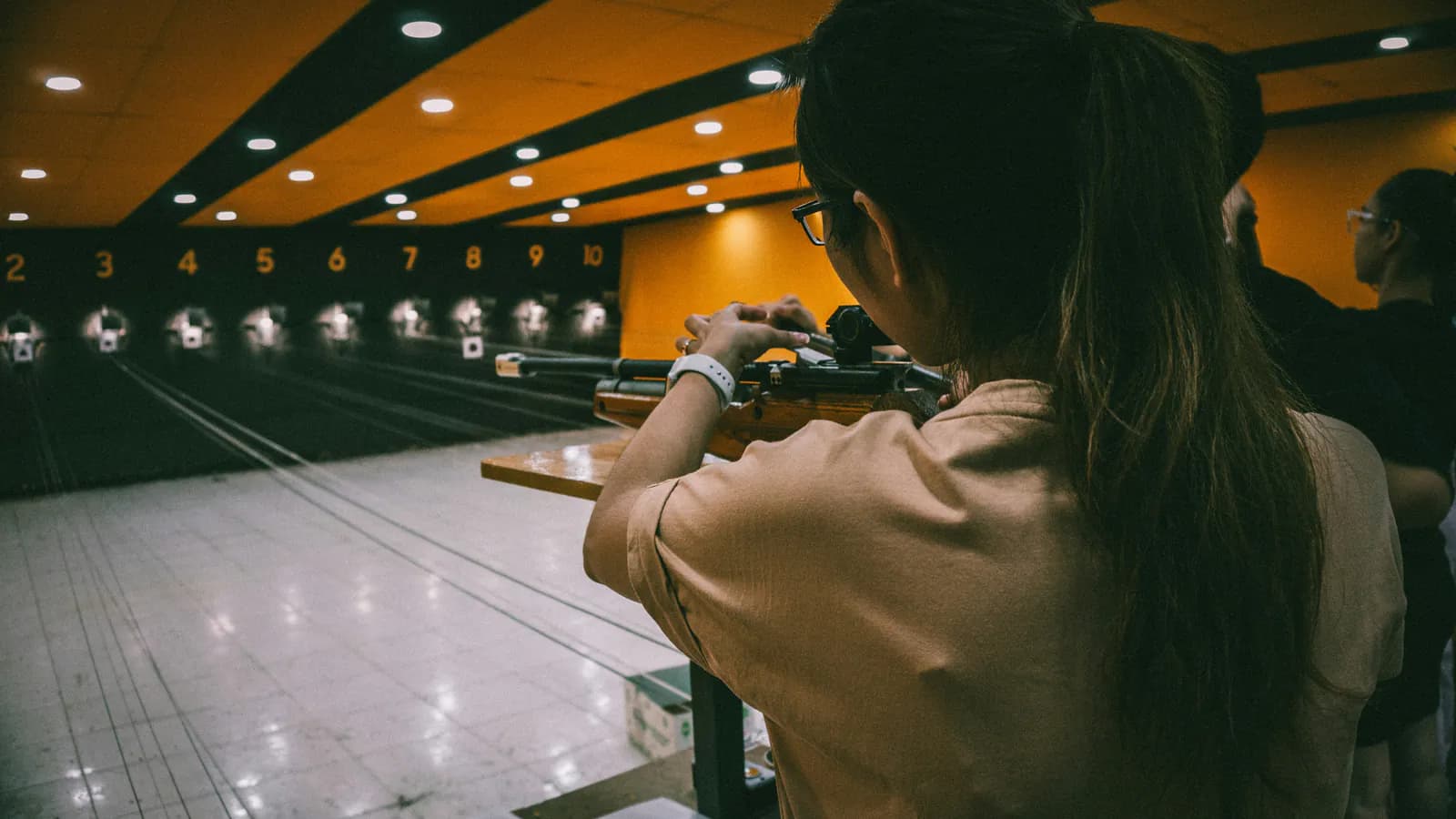
Indoor lanes are close in, climate controlled, and open on a schedule that works for a weeknight. In an Arizona summer that last part is worth more than it sounds. They are excellent for pistol work, sight in confirmation at short distance, and anyone who wants to shoot without planning a whole day around it.
The limits are real: short distances, restrictions on what calibers and what ammunition types are allowed, usually no drawing from a holster without a qualification, and often no rapid strings. If your goal is rifle zero confirmation past 25 yards or any movement based practice, this is not the place.
Club and membership ranges
Membership clubs sit between the two. You pay to join, you usually have to sit through an orientation, and in exchange you get access to facilities that are quieter, better maintained, and far more permissive about what you can practice. Many clubs run steel, action shooting matches, or long distance lines that public facilities cannot offer.
The tradeoff is the up front commitment, and the fact that membership is not unsupervised freedom. Clubs tend to have the strictest written rules anywhere, and they enforce them, because the members are the ones who lose the facility if something goes wrong.
Dispersed shooting on public land
Arizona has a lot of federal land, and recreational target shooting is permitted on some of it. This is the option people picture when they think of desert shooting: no line, no fee, no schedule, and no one telling you when to go cold.
It is also the option with the most ways to end up somewhere you should not be. There is no fence and no sign at most boundaries. Land that looks identical can be open, closed, or privately held, and closures move. Treat this as the category that requires the most homework, not the least.
Note the word federal. The state land scattered through the same country is a different thing entirely, and it is covered below.
Arizona State Trust Land is not open to target shooting. This is the single most common way people around Phoenix end up shooting somewhere they should not be. Target shooting is prohibited on state trust land, and a Trust Land Recreation Permit does not authorize it: the permit is for hiking, camping, and similar recreation, not for shooting. The only exception is shooting in the course of licensed hunting. Trust land sits right alongside federal land throughout the area and looks no different from the road, so identify the parcel before you unload the truck.
How public land shooting works, in general terms
The specifics belong to the agency that manages the parcel, and they are the only source worth trusting. In general terms, though, here is the shape of it:
- Not all public land is open to shooting. Different agencies manage different parcels under different rules, and some areas that were open in the past are now closed. Closure is common near growing development, near trailheads, and anywhere there has been a fire or a safety problem.
- State trust land is not federal land, and it is not a shooting option. Target shooting is prohibited on Arizona State Trust Land, and a Trust Land Recreation Permit does not authorize it. The permit covers hiking, camping, and similar recreation. It is not a shooting permit, and buying one changes nothing about this. The one exception is shooting in the course of licensed hunting. Trust land is scattered through the same country as the federal parcels and looks identical from the road, which is exactly why it catches people.
- Target restrictions exist and they change. Agencies commonly restrict what you may shoot at. Glass, appliances, televisions, furniture, and anything that shatters into fragments are not targets. Neither is vegetation, a rock face, or a sign.
- You pack out everything you bring in. Brass, shot up targets, target stands, cardboard, hulls, and every scrap of packaging. Cleaning up more than you brought is the correct standard. Trashed sites are the most common reason an area gets closed.
- The backstop is your responsibility. There is no berm out there unless you find one. You are responsible for the impact area and for everything beyond it: the wash on the other side, the trail you cannot see, the road, and the house that is further away than it looks in flat desert light. Shoot into a hillside or a dirt bank, never across open ground and never at anything skylined.
- Other people are out there. Hikers, riders, campers, and other shooters use the same land. Look before you set up, and be obvious about what you are doing.
Fire restrictions and the dry season
This is the part that surprises people who move here. Arizona goes through long dry stretches, and when fire danger rises the land management agencies issue restrictions that can directly ban the thing you drove out to do.
Three things hold no matter when you are reading this:
- Recreational shooting is prohibited during fire restrictions. Not narrowed, not limited to certain targets. Prohibited, on the land the restriction covers, for as long as it is in force.
- Target shooting is allowed on national forest land unless it has been restricted. The restriction is the exception rather than the default, and it is the thing you go looking for before a trip.
- BLM Arizona prohibits exploding targets, tracer ammunition, and incendiary devices year round. That one is not seasonal and it does not lift. It applies in the wettest week of the year.
Everything past those three is seasonal. It varies by district and by forest, it changes during the season, and it can change week to week. Which is why the note below carries a date and the list above does not.
Current status, as of September 2, 2026. There are no fire restrictions in effect on the Tonto National Forest. The last set was lifted on July 20, 2026. BLM Arizona is running its year round incendiary device restrictions, plus seasonal restrictions that vary by district. This is a snapshot of one day, it is seasonal, and it goes stale on its own. Check the two official pages linked below for the position on the day you are actually going, not the position on the day this was written.
How to actually confirm a spot
The verification process is the same every time:
- Figure out who manages the land. Use the managing agency's own mapping tools rather than a general purpose map app, because only the agency map shows the ownership boundary and the current designation.
- Read that agency's current notices. Fire restrictions, temporary closures, and target shooting orders are published by the agency and are the authoritative version.
- Call or email if it is ambiguous. Land offices answer this constantly. A short call beats a citation and a wasted drive.
- Ignore forum posts and old videos. A spot that was fine four years ago tells you nothing about today, and this is the most common way people end up somewhere closed.
- For ranges, call the range. Hours, fees, membership terms, allowed calibers, whether you can draw from a holster, and whether they are booked for a match are things only they can tell you, and all of them change.
Start with the agencies themselves
- Bureau of Land Management, Shooting Ranges. Nationally BLM manages 12 ranges itself, leases another 35 that partners manage, and counts 46 more that partners own and manage on former BLM public land. The page is the list, and it is the one to check rather than a count quoted somewhere else.
- Tonto National Forest, Hunting & Shooting. Target shooting rules, the areas closed to it, and the current restriction notices for this forest.
Range etiquette for a first visit
Every established range runs some version of the same procedure, and knowing it in advance removes most first visit anxiety.
- Cold range means untouched. When the line is called cold, actions are open, chamber flags are in, and nobody touches a firearm or stands at the bench for any reason, including packing up. You step back from the line and stay back until it goes hot.
- Muzzle downrange, always. The muzzle points at the backstop from the moment the gun comes out of the case to the moment it goes back in.
- Anyone can call a cease fire. If you see something unsafe, say it loudly. Nobody will be annoyed with you. That is how this works.
- Follow the range officer without debate. If a rule seems wrong, ask about it afterward, off the line.
- Ask before you assume. Drawing from a holster, rapid strings, and moving while shooting are restricted at most public facilities and require a qualification at many. Ask at the counter.
- Clean up your bay. Same standard as the desert.
What to bring
A short list that covers both a range trip and a desert trip:
- Eye and ear protection for everyone with you, plus a spare set. Electronic muffs over plugs is the comfortable answer for a long session.
- More water than you think, and shade. Read shooting in Arizona heat before any summer trip.
- Targets, target stands, a staple gun, and tape if you are going somewhere without them.
- Basic tools: the right hex keys for your mounts, a torque driver, a cleaning rod for a stuck case, and a small kit of accessories that lives in the range bag permanently.
- A trash bag, and a bucket or a mat if you want your brass back.
- A real trauma kit and the knowledge to use it, kept where everyone in the group can find it. On public land you are a long way from help.
- For a desert trip: full fuel, a spare tire you have actually checked, recovery gear, and a paper sense of where you are, because cell coverage disappears fast. A fixed blade from knives is genuinely practical desert kit, not a costume item.
The short version
Indoor for convenience, public outdoor ranges for distance on a maintained line, clubs for freedom to practice properly, federal public land for space if you are willing to do the homework. State trust land is not an option: no target shooting on it at all. Whichever you pick, confirm it with the managing agency on the day, pack out everything, and own your backstop.
Where to go next
Make the trip count. If you are hauling a rifle out there, have a plan rather than a box of ammunition and good intentions: how to zero a red dot sight is a good first outing structure, and confirming a zero is worth doing before anything else. If your glass is the weak link, that is what optics are for.
If you are new enough that a public line feels intimidating, going out with an instructor once solves it faster than reading about it. Our lessons cover range procedure and fundamentals in person around Phoenix and live over video, and a first session is mostly about finding out what you actually need to work on.
Verify before you drive out. Everything in this post is general and none of it is a current access report. Range hours, fees, membership rules, target restrictions, fire restrictions, and public land access change frequently and without much warning. Confirm with the managing agency (the Bureau of Land Management, Tonto National Forest, or the range itself) before you rely on anything here, and treat their current published notices as the only authoritative source. Arizona State Trust Land is not on that list because it is not open to target shooting at all. This is not legal advice.